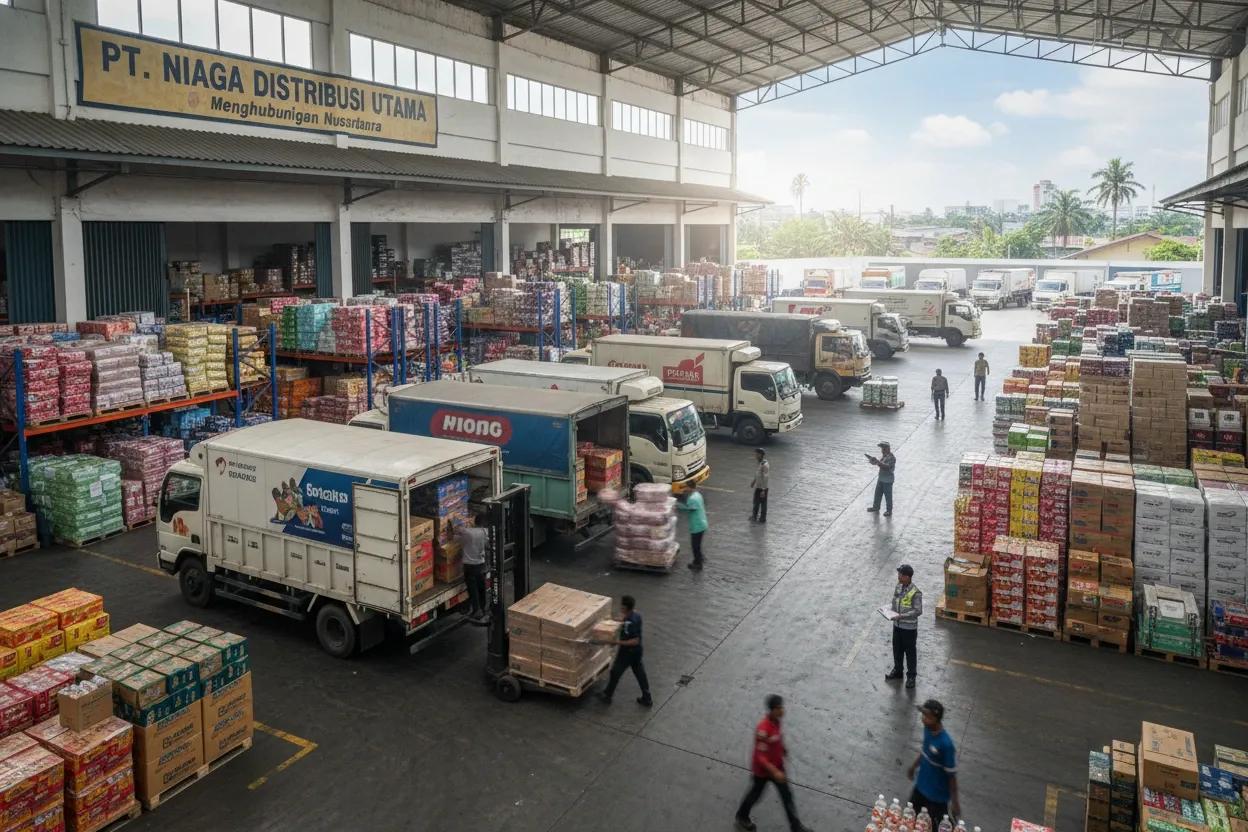
In today’s fast-paced market, even a small delay in the distribution process can lead to lost profits. Companies that fail to manage their product flow effectively risk stockouts, higher logistics costs, and reduced market presence.
Understanding your supply chain is key to avoiding these problems. A well-organized system ensures products reach the right place on time, keeps inventory under control, and helps businesses stay competitive.
Definition of Distribution
Distribution is the process of transporting goods from producers to businesses or directly to customers. The process includes storing goods, managing inventory, and delivering products to wholesalers, retailers, or end users. It also involves selecting delivery routes, managing transportation fleets, organizing warehouses, and controlling logistics costs while maintaining delivery accuracy throughout the supply chain.
To run efficiently, this process requires clear planning, coordination between teams, and the use of distribution software. For this reason, many businesses invest in supply chain management and tracking systems to improve visibility and stay competitive.
Types of Distribution
Understanding the different types of distribution management helps businesses choose the right approach based on their products, market, and goals. Each type offers a different level of control, reach, and customer interaction.
- Direct
Direct distribution occurs when a company sells its products straight to customers without involving wholesalers or retailers. This approach allows businesses to maintain full control over pricing, branding, and customer experience. It is commonly used by companies that offer unique products or want to build closer relationships with their customers. - Indirect
Indirect distribution involves third parties such as wholesalers, retailers, or agents to move products from the manufacturer to the end customer. In this model, partners handle parts of the sales process, including storage, promotion, and delivery.
This approach helps expand market reach, although businesses have less control over how products are presented and priced. Industries such as retail, food and beverages, consumer goods, and electronics often use this model to reach a wider audience. - Intensive
Intensive distribution focuses on placing products in as many outlets as possible. The goal is to make products widely available across supermarkets, convenience stores, gas stations, and vending machines.
This strategy is commonly used for everyday items such as snacks and soft drinks. It increases product visibility and sales volume, but also requires companies to produce in large quantities to meet high demand. - Exclusive
Exclusive distribution limits product availability to one or a few outlets within a specific area. This approach is typically used for premium or specialized products such as high-end watches and designer fashion. It often comes with strict guidelines on pricing, product display, and customer service.
Benefits of Efficient Distribution
In the fast-moving consumer goods (FMCG) industry, a well-managed supply chain is critical. Products like snacks, beverages, personal care items, and household essentials move quickly and have high demand variability. Without a system, even popular products can face stockouts, lost sales, and damaged brand reputation.
Here are the main benefits of distribution management:
- Expand Market Reach
The distribution of goods allows companies to reach a wider customer base, including new regions or markets. By having products available where customers can easily access them, businesses increase visibility and sales opportunities. - Reduce Costs
Working with authorized distributors or a Distribution Management System (DMS) helps companies lower operational costs by reducing labor requirements, saving time, and minimizing paper-based processes - Valuable Market Insights
Distribution partners provide critical information about consumer trends, sales, market demand, and competitor activity. Businesses can track what promotions competitors run, which products sell best, and adjust strategies accordingly. - Efficient and Quick Deliveries
A well-managed supply network ensures products reach customers promptly. In many cases, this process is supported by route optimization features that help distributors determine the fastest and most efficient delivery routes - Improved Inventory Management
An efficient product flow reduces the risk of stock shortages or overstocking. By tracking inventory accurately, businesses can maintain the right balance of supply, avoid waste, and respond quickly to changes in demand.
Distribution Across Industries
Below are some of the main industries that rely heavily on distribution management software:
- Food
Manages the movement of packaged foods, snacks, and perishable goods. - Beverage
Handles products such as soft drinks, juices, bottled water, and alcoholic beverages. - Pharmaceutical
Distributes medicines, supplements, and healthcare products. Operations must comply with strict regulations, ensuring product safety, traceability, and proper handling throughout the supply chain. - Personal Care and Cosmetics
Manages skincare, beauty, and hygiene products. - Cigarette and Tobacco
Handles regulated tobacco products with strict inventory control and compliance tracking. - Automotive Supporting
Supply spare parts, lubricants, and other automotive-related products. - Building Material
Distribute construction materials, tools, and hardware supplies. - Other FMCG Distributors
Manage fast-moving consumer goods such as household essentials, packaged goods, and daily-use products. High turnover and wide market reach are key characteristics of this segment.
BOSNET Distribution Software for Efficient Supply Chain
BOSNET solutions help distributors manage sales and product flow through integrated systems. The following solutions are designed to support operations:
- Distribution Management System (DMS)
Distribution Management System (DMS) is a core solution that manages and automates key operational processes. It centralizes activities, reduces manual work, and provides real-time visibility across all operations. - Mobile Distribution
Mobile Distribution is a mobile application built to support field teams, keeping their activities organized, transparent, and aligned with sales targets. It tackles common distributor challenges such as limited oversight, inconsistent reporting, and missed customer opportunities. - Warehouse Management System (WMS)
The Warehouse Management System (WMS) simplifies warehouse operations. It allows distributors to manage inventory, track stock movements, and improve order fulfillment accuracy. - Smart Route
Smart Route is designed to optimize delivery routes, ensuring timely and cost-efficient deliveries. By analyzing delivery data, traffic conditions, and customer locations, it generates the most effective routes for sales and delivery teams. - Mobile Delivery
Mobile Delivery streamlines the delivery process by enabling drivers and field teams to manage orders directly from mobile devices. The system tracks deliveries in real time, records confirmations, and captures proof of delivery.
150+ Renowned Brands Trust BOSNET for Their Distribution
Over 150 brands rely on BOSNET to manage their distribution and sales processes efficiently. BOSNET provides an end-to-end solution for distributors to track operations, performance, and sales in real time.
Contact us to see how BOSNET can streamline your operations and deliver real-time visibility across your distribution network.
#BOSNET #BestFMCGRunsBOSNET #Distribution #SupplyChain #IncreaseRevenue #ReduceCost