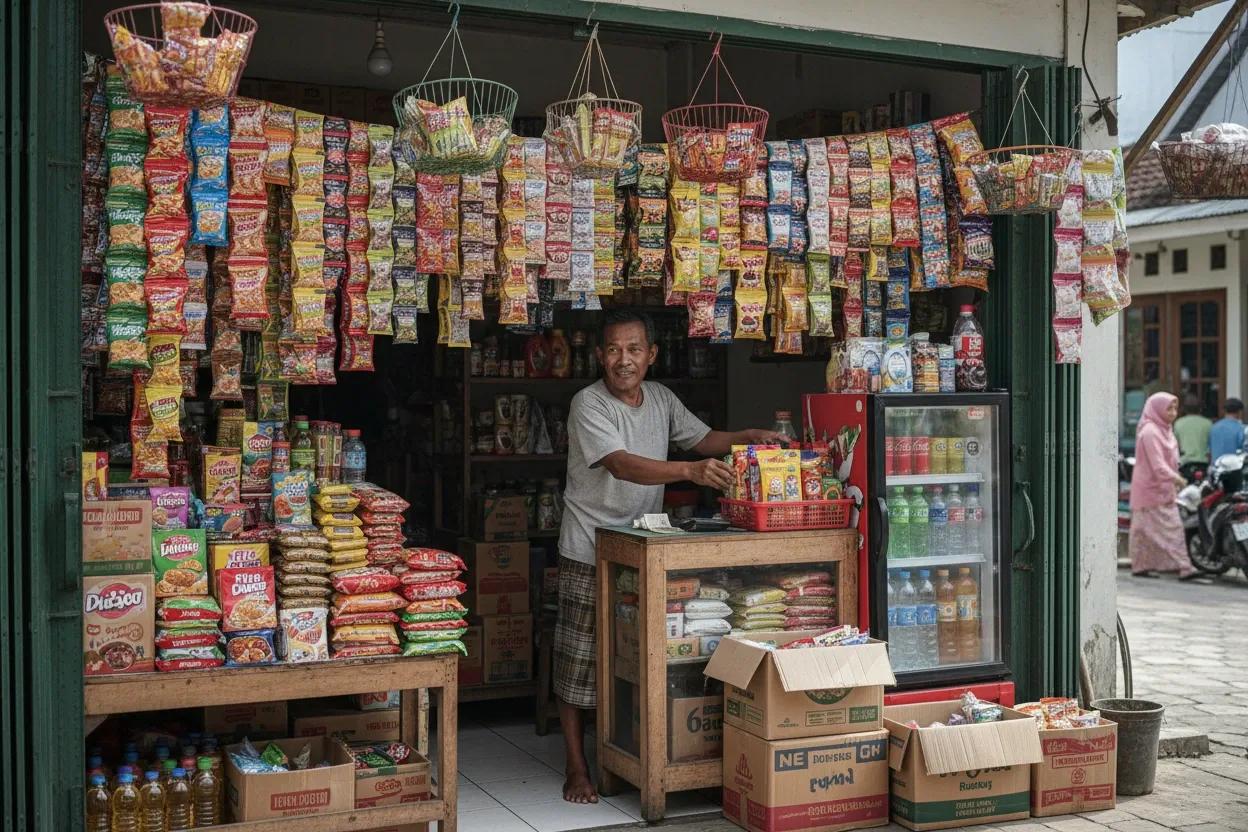
In Indonesia, general trade remains a vital part of commerce across many regions. Despite the rapid growth of modern retail, traditional markets continue to serve as primary sources for daily household needs.
For businesses, understanding these distribution channels is crucial for implementing effective trade marketing. Without clear insight into local market dynamics, marketing strategies may fall short.
What is General Trade?
General trade (GT) or traditional channels refers to small-scale businesses such as local shops or kiosks, usually individually owned. These businesses target customers who need everyday products in small quantities, making them ideal for daily household needs.
In Indonesia, many consumers rely on these traditional outlets to buy groceries without having to purchase in bulk. A distinctive characteristic of this channel is the negotiation process, where sellers and buyers often agree on prices through direct bargaining.
How Distribution Works in Traditional Channels
The distribution process in this channel is relatively simple. Products are typically delivered directly from manufacturers or distributors to small retailers such as kiosks and neighborhood stores.
This direct approach allows products to reach end customers more quickly, ensuring availability for daily household needs while maintaining a close connection between sellers and consumers.
Advantages of General Trade for Producers and Distributors
General trade offers a strategic way to capture market share, especially in local and traditional retail segments. Small shops and kiosks usually do not impose complex requirements on producers or distributors.
As long as the products are legal, these retailers are generally open to new suppliers. Pricing and supply quantities can often be agreed upon through arrangements that help build strong, long-term relationships among producers, distributors, and retailers.
Common Challenges of General Trade in the Field
Despite their advantages, traditional retail channels come with several challenges that can impact day-to-day operations. Distributors and field teams often face the following issues:
- Frequent Price Changes
Pricing in general trade is typically more flexible and can change quickly based on local demand. This requires businesses to constantly monitor market conditions and adjust their pricing strategies. - Complex Inventory Management
Managing inventory in general trade can be challenging due to the large number of sales points spread across different locations. Businesses need to continuously monitor and update stock levels at each store while ensuring consistent product availability. - Relationship-Driven Operations
Success in traditional channels depends heavily on trust and personal relationships. Field sales must actively build and maintain strong connections with store owners to secure loyalty and maintain consistent sales performance.
General Trade Marketing Strategies
To succeed in general trade, businesses need a well-structured marketing approach, they are:
- Sales Route Planning
Optimizing sales routes is essential to ensure efficient coverage of general trade outlets. A well-planned route allows sales teams to visit more stores while minimizing travel distance and travel time. This improves productivity while reducing operational costs.
A simple general trade example would be salesmen visiting multiple neighborhood stores in a single route, ensuring product availability and visibility across outlets. - Data Analysis
Collecting and analyzing data from sales activities, outlet visits, and customer preferences provides valuable insights into market trends and consumer behavior.
These insights enable companies to identify high-performing areas, buying patterns, and adjust sales and promotional strategies more effectively. - Identifying Market Segment
Segmentation helps businesses focus their efforts on the right target audience. In general trading, segmentation can be based on demographics, geography, psychographics, and product categories. - Pricing and Promotion
Businesses need to carefully analyze competitor pricing, production costs, and the desired profit margins. In many cases, customers in general trade channels are highly price-sensitive. Therefore, competitive pricing combined with attractive promotions plays a key role in influencing purchasing decisions. - Train Field Sales
Field sales must be able to understand the product in depth, communicate the value proposition clearly, and execute marketing strategies effectively. - Regular Sales Visits
Routine visits to outlets are necessary to stay aligned with dynamic market conditions. Consumer behavior and market trends can change quickly, especially in traditional trade environments.
Streamline Your General Trade Operations with BOSNET Solution
BOSNET helps businesses optimize their general trading operations through smarter, data-driven solutions. Our platform enables companies to map and optimize sales routes, ensuring efficient coverage of general trade outlets.
BOSNET solutions can be seamlessly integrated with inventory management systems. This allows businesses to easily track and update stock data at each sales point, ensuring consistent product availability across the entire distribution network.
Contact us to learn how BOSNET can streamline your general trade operations.
#BOSNET #BestFMCGRunsBOSNET #Distribution #SupplyChain #IncreaseRevenue #ReduceCost