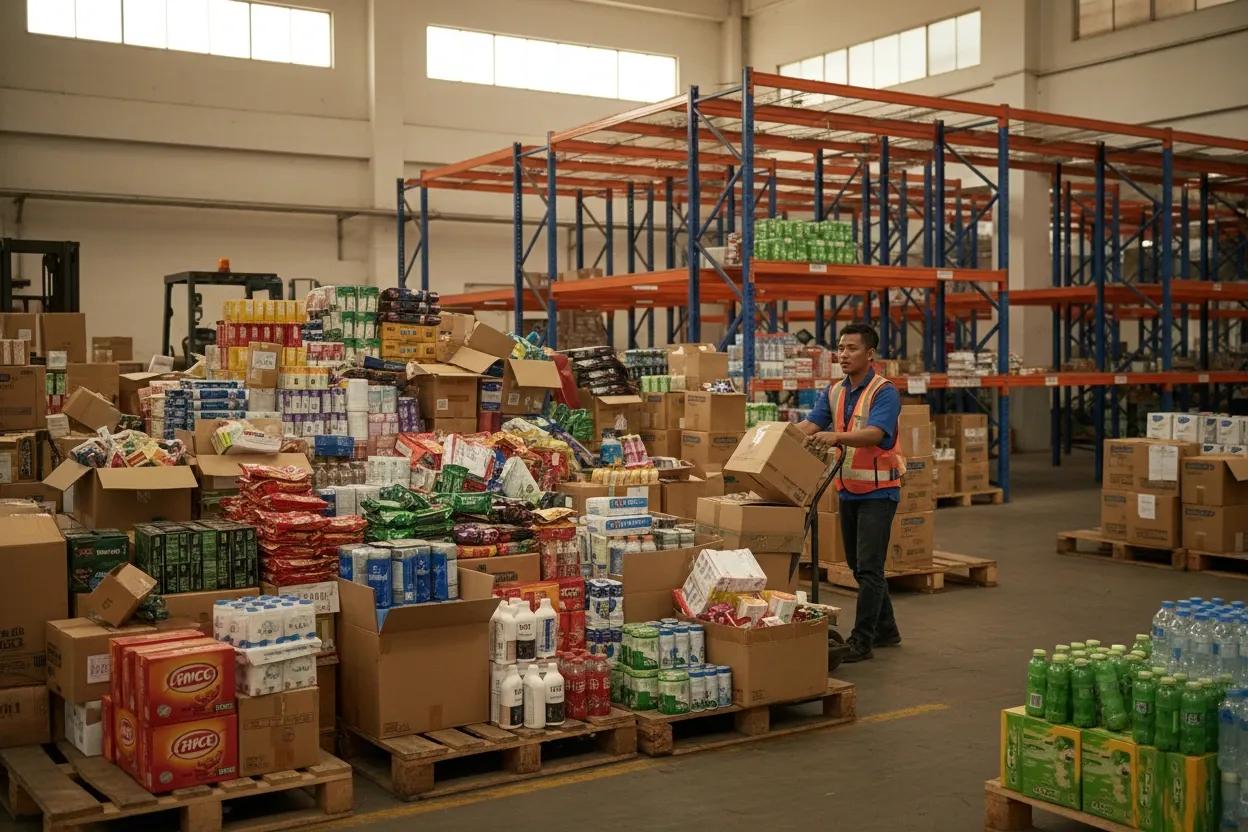
Putaway is crucial for maintaining operational efficiency and inventory management. Businesses require a well-organized inventory placement process to ensure products are stored in appropriate locations, supporting efficient warehouse operations and lowering operational costs.
Without an effective inventory placement process, warehouses may face challenges such as misplaced stock, longer picking times, inaccurate inventory data, and inefficient space utilization.
What Is Putaway?
Putaway is the process of transferring inventory from the receiving zone to its designated storage spot within a warehouse. Once goods arrive from suppliers or production, they are not instantly placed in their final storage locations. Instead, they go through multiple handling steps to ensure they are stored appropriately, taking into account factors such as product type, demand, and warehouse layout.
An effective putaway process ensures warehouses organize inventory efficiently, making stock easier to find during picking and fulfillment. By assigning items to optimal storage locations, companies can cut handling time, boost inventory accuracy, and streamline daily operations.
Steps in the Putaway Process
- Receiving
Products are received at the warehouse and inspected to verify that the quantity and quality align with the purchase order or production data. Any discrepancies or damages are identified before the goods proceed to the next stage. - Data Recording
After inspection, product information is entered into the warehouse management system. The recorded data typically includes SKU, quantity, product description, batch number, and other inventory details required for tracking. - Location Assignment
The system or warehouse team determines storage locations for items, considering factors such as product category, picking frequency, storage capacity, and warehouse layout. - Transfer
Warehouse operators use equipment such as forklifts and pallet jacks to transfer goods from the receiving area to their assigned storage locations. - Storage
Items are stored in racks, pallets, shelves, or other designated areas based on the warehouse setup and inventory needs. - System Update
Once the goods are stored, the warehouse management system is updated to record the new storage location. Accurate system updates help maintain inventory visibility and support faster stock retrieval in future operations.
Why Is Putaway Important
Putaway is essential to warehouse operations, as it directly affects storage efficiency and inventory management. An organized approach minimizes the time spent searching for items during picking and fulfillment. Proper placement of items in appropriate locations enables warehouses to improve delivery speed and optimize storage capacity.
In the FMCG industry, many companies rely on a Warehouse Management System (WMS) to manage putaway. The system helps determine suitable storage locations, track inventory movement, and maintain accurate stock data across warehouse operations.
How a Warehouse Management System Optimizes the Putaway Process
A Warehouse Management System (WMS) helps companies optimize inventory and validation inside the warehouse. By integrating warehouse operations with digital systems, businesses can improve inventory handling, reduce operational delays, and maintain accurate stock management.
- Automate Putaway
A WMS helps automate putaway activities by integrating technologies such as barcode scanning and digital inventory tracking. The system can guide warehouse operators to assigned storage locations based on predefined rules and warehouse conditions. Automation helps reduce human error while accelerating inventory recording and product tracking processes. - Improved Visibility
All warehouse data can be accessed and updated in real time through the system. Companies, principals, and distributors can monitor stock status, storage locations, and inventory movement directly on the platform, improving operational visibility across warehouse activities. - Efficient Storage Management
A WMS helps businesses analyze multiple factors when determining the best storage location for incoming products. The system can use inventory management methods such as FIFO and LIFO, along with product dimensions, storage capacity, and picking frequency, to support warehouse space utilization and inventory organization. - Increase Data Accuracy
By using barcode scanners, a putaway software helps ensure that inventory data entered into the system remains accurate and consistent. Digital validation processes help minimize manual recording errors and reduce inventory discrepancies during warehouse operations. - Seamless Integration with Other Software
Warehouse Management Systems are often integrated with other business platforms such as Distribution Management Systems (DMS), ERP software, and supply chain systems.
Digitalize Putaway with BOSNET Warehouse Management System (WMS)
BOSNET Warehouse Management System automates warehouse operations, providing FMCG businesses with real-time tracking and full visibility across all locations. Our solutions keep stock accurate and easy to manage, reducing errors and improving efficiency.
With its self-correcting system, BOSNET Warehouse Management System automatically updates inventory records based on the latest physical activity, delivering precise data for smarter decision-making and helping FMCG businesses increase revenue and reduce costs.
Contact us to see how BOSNET can optimize your putaway.
#BOSNET #BestFMCGRunsBOSNET #Distribution #SupplyChain #IncreaseRevenue #ReduceCost