Buffer stock is often affected by rapid changes in market demand and customer needs. Purchasing patterns shift due to promotions, seasonality, product trends, and external factors that are difficult to predict.
When a business fails to adapt to these changes, it often leads to lost sales, excess stock, or higher holding costs.
What Is a Buffer Stock?
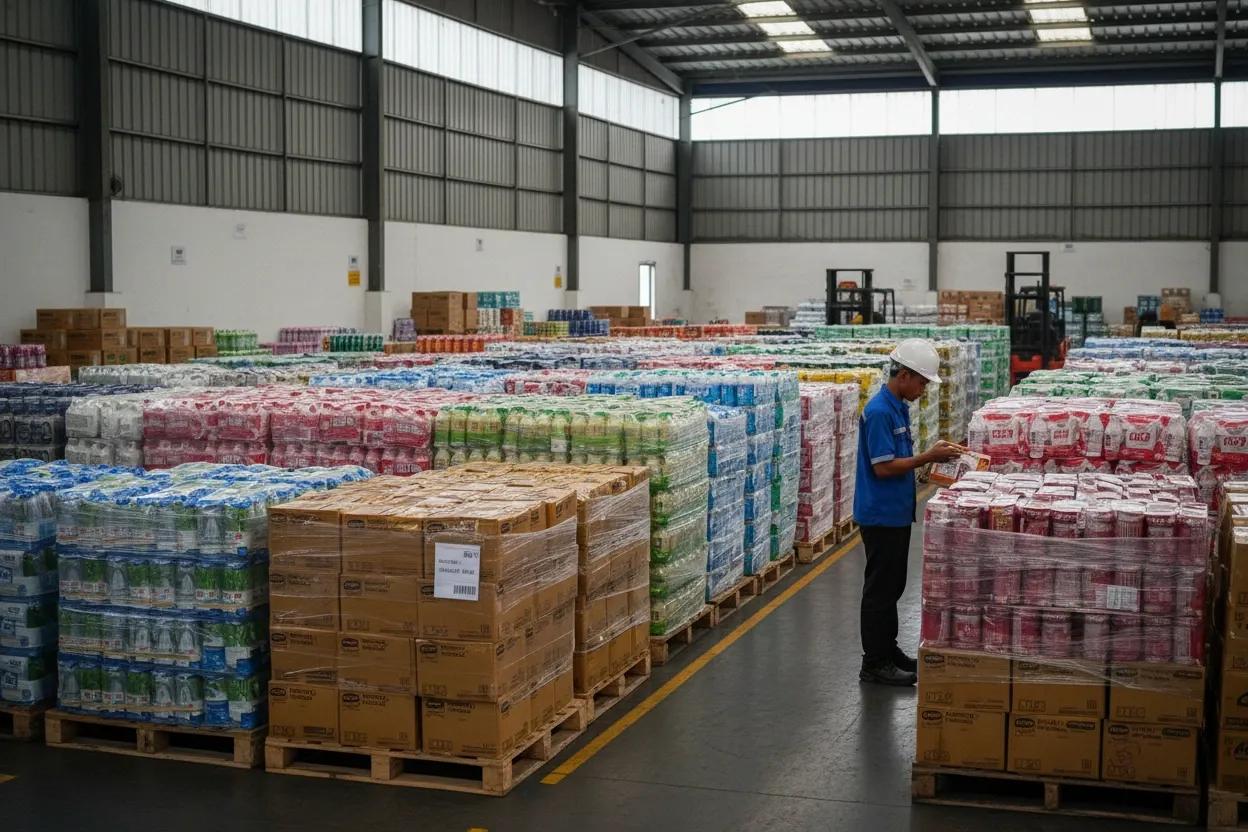
Buffer stock is extra inventory that a company holds beyond its immediate operational needs. Its purpose is to serve as a safety net against supply disruptions, unexpected demand spikes, or delayed deliveries.
In simple terms, it is a calculated inventory reserve. It is not excess stock caused by poor planning, but inventory intentionally maintained to keep business operations running when unexpected situations occur.
How to Calculate Buffer Stock
To determine the optimal inventory reserve, companies can use the following simple formula:
Buffer Stock = (Lead Time x Average Daily Demand) + Additional Safety Stock
- Lead time: The time from order placement to inventory receipt and readiness for use.
- Average daily demand: The estimated daily product demand calculated based on historical sales and inventory data.
- Additional safety stock: Extra inventory prepared to anticipate uncertainty in demand, supply chain disruptions, or unexpected operational conditions.
Why Having a Buffer Stock Is Important
Buffer stock plays an important role in inventory management, especially for businesses that operate in fast-moving markets such as FMCG. By keeping additional inventory available, companies can maintain product availability and reduce operational disruptions.
- Avoid Demand Spikes
Market demand in the FMCG industry is rarely predictable. Consumer behavior shifts, promotional periods create sudden surges, and seasonal trends can push order volumes beyond what was originally forecasted.
By maintaining an inventory reserve, businesses can still fulfill demand even when it exceeds expectations. Instead of turning customers away or delaying orders, the company uses this reserve to keep operations running without interruption. - Anticipating Supplier Disruption
Even with a reliable supplier network, issues can arise without warning. Delivery delays, damaged goods in transit, or incorrect shipments are all scenarios that can leave a business short on stock at critical moments.
Buffer stock helps companies stay operational regardless of what happens on the supplier side. When a shipment is delayed or an order arrives incomplete, the reserve stock provides enough coverage to bridge the gap until the situation is resolved. - Reduce the Risk of Stockouts
Stockouts are one of the most critical risks in inventory management. When they occur, businesses may lose sales opportunities, reduce customer confidence, and shift demand to competitors.
Maintaining an inventory reserve helps reduce the chance of shortages. It acts as a final layer between regular stock levels and a complete stockout, giving the business time to replenish inventory without interrupting operations.
Challenges in Managing Buffer Stock
While buffer stock offers clear operational advantages, it also introduces a set of challenges that businesses need to manage carefully, they are:
- Increased Storage Costs
Holding additional inventory means storing more goods than what is immediately required. This directly translates to higher warehousing expenses. More space is required, and the costs associated with managing that space, including handling, security, and utilities, increase accordingly. For businesses operating on tight margins, these additional costs can add up quickly. - Risk of Damaged Goods
Buffer stock poses a particular challenge for businesses dealing with products with a limited shelf life. The longer goods sit in storage, the higher the risk of spoilage and expiry.
This is particularly relevant in FMCG, where perishable products represent a large portion of inventory. Without proper stock rotation and monitoring, reserved inventory can turn into a liability. - Complex Inventory Management
Additional inventory can make inventory management processes more complex. Stock monitoring, tracking, and warehouse operations may require adjustments to maintain accuracy and efficiency.
To handle these challenges, many FMCG companies use a Warehouse Management System (WMS) to improve inventory visibility, optimize stock control, and maintain organized warehouse operations.
Optimize Buffer Stock Management with BOSNET Solutions
- Distribution Management System (DMS)
BOSNET Distribution Management System helps companies manage distribution activities in real time. The platform connects principals, distributors, and sales teams within a single system, enabling data to flow efficiently across the organization. - Warehouse Management System (WMS)
The Warehouse Management System is designed to control, manage, and optimize warehouse operations end-to-end. This includes inbound receiving, storage, picking, packing, and outbound distribution. - Sales Forecast
BOSNET Sales Forecast helps businesses estimate future demand based on historical sales data and market trends. Accurate forecasting allows companies to prepare the right amount of buffer stock and reduce the risk of excess inventory or stock shortages.
150+ Renowned Brands Trust BOSNET for Their Distribution
Over 150 brands rely on BOSNET to manage their distribution and sales processes efficiently. BOSNET provides an end-to-end solution for distributors to track operations, performance, and sales in real time.
Contact us to see how BOSNET can streamline your operations and deliver real-time visibility across your distribution network.
#BOSNET #BestFMCGRunsBOSNET #Distribution #SupplyChain #IncreaseRevenue #ReduceCost