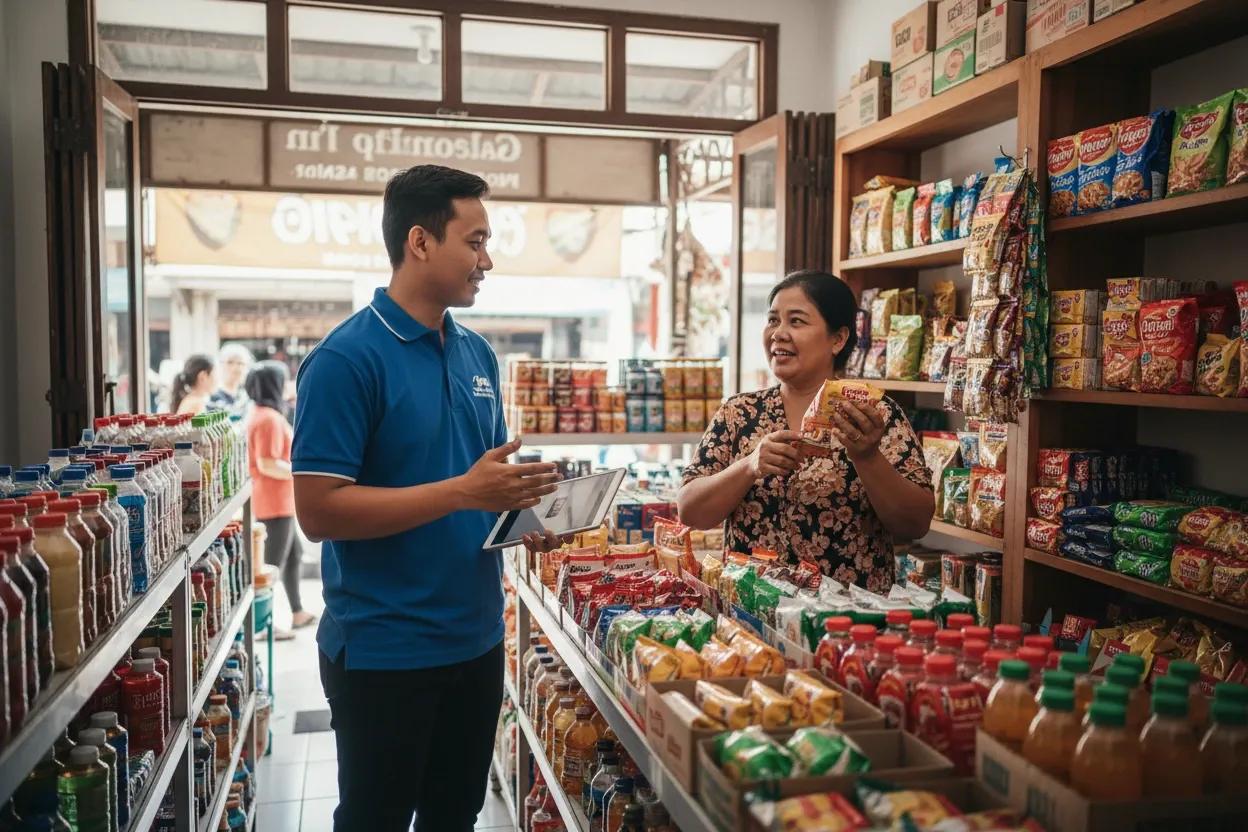
Closing a deal rarely happens by chance. Field sales teams rely on closing sales techniques to guide prospects toward a purchase decision at the right moment.
When applied correctly, these techniques can significantly drive conversion rates, turning hesitant prospects into confirmed buyers and lost opportunities into revenue.
Definition of Closing Sales
Closing sales is the final and most important stage in the sales process. At this point, a prospect decides to purchase a product or service after considering the value, benefits, and solution offered.
This stage requires a field sales to secure pricing, payment, or other terms while maintaining trust and confidence throughout the conversation. A good closing process also creates a sense of urgency that encourages the prospect to take action without delay.
Closing Sales Techniques for Salesman
There are many closing sales techniques a salesperson can apply depending on the situation and the prospect's behavior. Choosing the right approach at the right moment often determines whether a deal is won or lost.
- Assumptive
The assumptive close requires a salesman to carry a confident and optimistic mindset throughout the interaction. The approach works best when the prospect has already shown interest in the product or asked specific questions related to pricing, features, or implementation.
Instead of waiting too long for a final answer, the salesman can begin asking questions as if the agreement has already been made. This creates a natural transition toward the purchasing decision without making the prospect feel pressured.
For example, the salesman may ask about preferred payment methods, delivery schedules, or product options rather than repeatedly asking whether the prospect wants to buy. - Scale
Scale closing technique helps field teams measure a buyer’s level of interest using a simple rating scale from 1 to 10. This method allows sales teams to understand how close the buyer is to making a purchase decision.
By asking for a rating, the salesman can also identify whether the explanation has been clearly understood by the prospect. This technique also helps the salesman determine the next step that should be taken to convince the prospect and continue the discussion in the right direction.
For example, a salesman may ask:
• “On a scale from 1 to 10, how interested are you in continuing with this product?”
• “On a scale from 1 to 10, how likely are you to place an order today?”
• “If your interest is around 8 or above, we can proceed with arranging the first delivery and confirming the product variant for your store.” - Puppy Dog
The puppy dog closing sales approach gives prospects an opportunity to try the product before making a purchasing decision. This technique does not rely on pressure or aggressive selling methods. Instead, the salesman allows potential customers to interact with the product and experience its value in a natural way.
The salesperson offers a small trial, sample, or limited quantity so the buyer can test how the product performs in real conditions. This can include:
• Trial placement on shelves
• Small initial order
• Sampling for customer response
• Short-term display in-store - Scarcity
Scarcity Close, also known as the Urgency Close or Now or Never Close, is a technique that encourages a buyer to make a decision within a limited time frame.
This type of closing sales creates a sense of urgency by highlighting limited offers, restricted product availability, or special benefits that are only available for a certain period. The technique often takes advantage of the Fear of Missing Out (FOMO), where prospects do not want to lose a valuable opportunity.
In many cases, salesmen may offer discounts, bonus features, or additional benefits if the prospect decides to make a purchase immediately.
For example:
• “This promotional price is only available until the end of this week for current stock allocation.”
• “If the order is confirmed today, you will receive an additional bonus unit for each carton purchased.” - Summary
Suitable for prospects who are comparing products from different vendors at the same time. Buyers often receive several product offers in a short period. Because of this, key product details can be easily forgotten or mixed between different options.
Through this technique, field teams present a clear summary of the product’s key benefits, features, and value points. - Takeaway
Uses reverse psychology by creating the sense that a buyer may lose access to a valuable opportunity. This closing sales approach is based on a simple idea. Buyers tend to place higher value on products when availability, pricing, or promotional conditions feel limited.
The goal is to encourage the prospect to reconsider the decision because they do not want to miss the opportunity, pricing, feature, or offer that has been discussed.
Common triggers include:
• Limited promotional period
• Restricted product allocation
• Seasonal pricing conditions
• Temporary stock availability
As an example, a salesman can say:
“If this product is not a priority right now, we can hold the discussion. Just note that the current pricing and allocation apply only for this month.”
The message must remain respectful and clear. The intention is not to pressure the buyer, but to highlight that delaying the decision may change the current opportunity conditions. - Needs
Need closing sales focuses on the specific needs of the buyer and how a physical product fits those needs.
In FMCG sales, this approach depends on careful listening during field visits. Sales representatives must understand what the retailer or customer needs in terms of price point, product demand, shelf movement, packaging size, and consumer preference.
Start by capturing the buyer’s requirements during the conversation. Then, map each requirement to the relevant product feature such as size, flavor, packaging type, or price category. - Questions
A questions close is a sales technique that uses strategic questions to guide the buyer toward a decision. Use short and focused questions that connect directly to the buyer’s situation. Each question should guide the conversation toward a clear direction.
Example questions:
• “Does this product match the demand you see in your store?”
• “Would this price range fit your current customer segment?”
• “How many units would you like to start with for this order?”
• “Is there anything stopping you from placing this today?”
• “Based on what we discussed, this product fits your store’s demand and price range. How many cartons would you like to start with for the first order?” - Visual
Visual close uses visual presentation to help the buyer understand the product and its value. Tthis approach can be done through product photos, short videos, printed materials, or simple charts that show product features, usage, or packaging options.
Instead of relying only on verbal explanation, the salesperson presents the product in a visual form. This helps the buyer see the product clearly and understand how it fits into their store or customer demand. - Empathy
Empathy is a closing sales technique that builds connection by showing understanding of the prospect’s situation. In FMCG, this approach helps sales representatives relate to the buyer’s daily challenges, such as stock management, customer demand changes, or limited shelf space.
Start by acknowledging the buyer’s condition or challenges. This can be done through simple comments, recognition of effort, or understanding of business pressure. The key is sincerity. The message should feel natural, not forced.
Examples of approach:
• Acknowledge store activity or busy conditions
• Recognize challenges in managing fast moving stock
• Appreciate how the buyer handles customer demand
• Show understanding of limited space or budget constraints
Improve Your Closing Sales with BOSNET Mobile Distribution
A winning closing sales requires more than product knowledge and field visits. Businesses need a connected system that helps sales teams manage customer interactions, monitor sales activities, and execute sales strategies with better visibility across every distribution channel.
BOSNET Mobile Distribution helps businesses track field teams, manage sales action plans, monitor retail execution, and improve sales follow-up processes. With real-time operational visibility, companies can help salesmen improve closing sales performance while maintaining efficient distribution operations.
Contact us to learn how BOSNET Mobile Distribution helps field sales teams manage daily activities and improve closing sales.
#BOSNET #BestFMCGRunsBOSNET #Distribution #SupplyChain #IncreaseRevenue #ReduceCost