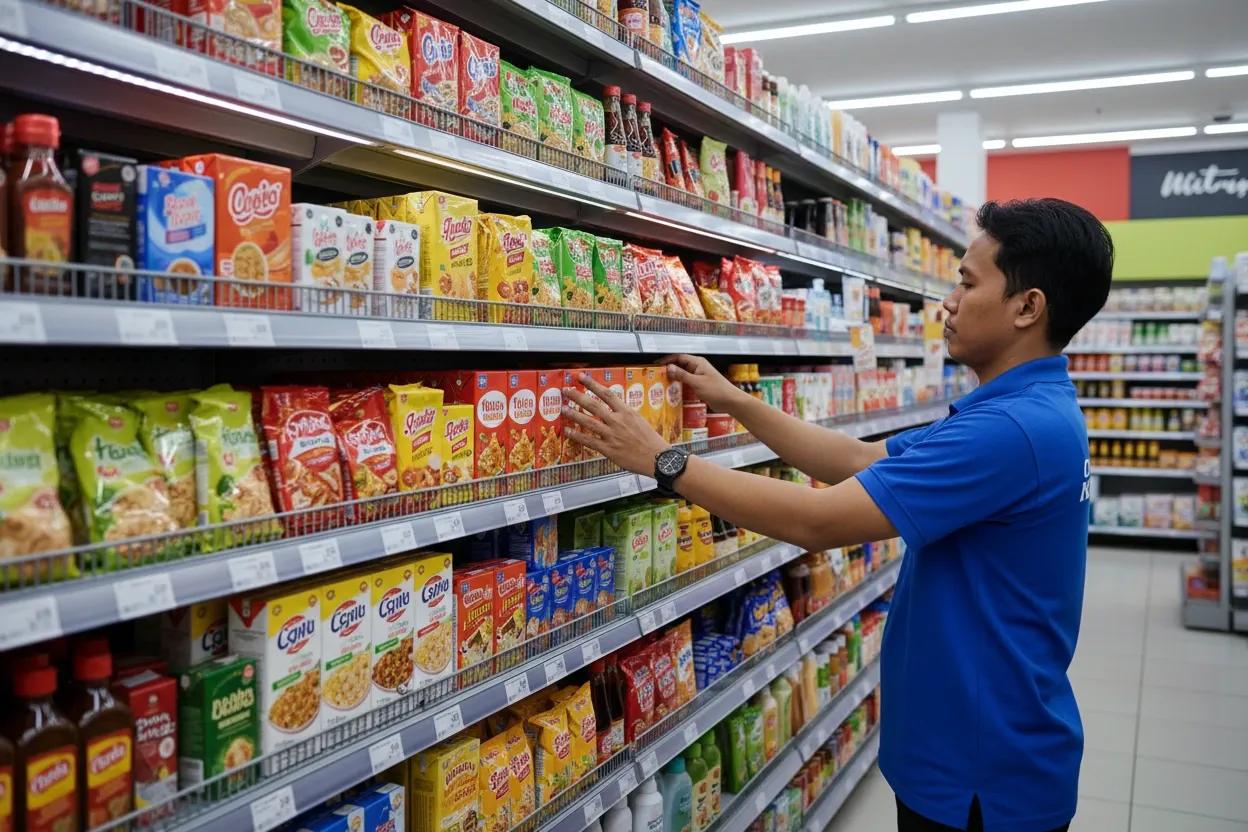
In the Fast-Moving Consumer Goods (FMCG) industry, effective merchandising is a key factor in attracting consumer attention and driving sales. One of the most important tools used in this process is the planogram, which helps organize how products are displayed on shelves.
In a highly competitive retail environment, FMCG companies must compete to make their products stand out among thousands of alternatives. This is why the concept of a planogram becomes crucial in optimizing product placement and improving sales performance.
Definition of Planogram
A planogram is a visual scheme used to plan the placement of products on retail shelves, racks, or even inside vending machines. It serves as a visual and strategic guide that determines where and how each product should be displayed.
In retail, planogram functions as a blueprint for store layouts, helping retailers organize merchandise in a way that is both logical and appealing to customers. By standardizing product positioning, it ensures consistency across different store locations while supporting brand visibility and shopper convenience.
The main objective of a planogram is to maximize space efficiency and sales. Each section of the display is carefully arranged so that high-demand or high-margin items gain better visibility, and related products are placed close to each other to encourage additional purchases.
Types of Planogram
- Horizontal
A horizontal planogram is a product arrangement strategy where items are placed side by side on the same shelf level. This approach allows retailers to present a wider variety of options within a single line of sight.
In this setup, product placement is often aligned with the height of the target market. Items intended for adult consumers are typically positioned from the middle shelf upwards to match natural eye level. Meanwhile, products designed for children are placed from the middle shelf downwards, making them more visible and accessible. - Vertikal
Products are arranged across different shelf levels vertically. This layout ensures that items are distributed from top to bottom, creating easy access and visibility for all customers regardless of height or viewing angle.
This type of arrangement is commonly used for product categories that appeal to both adults and children. By spreading related products vertically, retailers make it easier for different customer groups to find items that suit their needs without limiting visibility to a single shelf level. - Block
Goods from the same category or related groups are placed together. By grouping related products side by side, customers can easily compare different brands, prices, and quality levels. - Market Share
Product placement is determined by each item’s ability to generate revenue. Products with high sales performance are given prominent and strategic positions within the display.
Retailers prioritize high-performing items by placing them in areas with the greatest visibility and customer traffic. This ensures that top-selling products receive maximum exposure and continue to drive consistent revenue. A common example can be seen in FMCG products, which are often positioned near the point of sale - Based on Margin
This type of planogram focuses on arranging products based on the profit margin they generate. Wholesalers, retailers, and other merchants often sell products from various brands within the same category. In this setup, product placement is determined by the margin offered by each brand. Items with higher margins are typically given more strategic positions to increase visibility and drive purchases.
Why Planograms are Essential in FMCG Merchandising
Planograms play a critical role in FMCG merchandising by delivering clear benefits for manufacturers, retailers, and consumers.
With these various benefits, planograms have become an essential tool in FMCG merchandising strategy. They can improve product visibility, drive sales, and create a better shopping experience for consumers.
Function of Planogram
A planogram plays a key role in organizing retail space, guiding store execution, and supporting sales growth.
- Maximizing Display Space
Every inch of retail space has value. A planogram helps arrange products so every shelf, rack, or display area is fully used. No space is left empty which makes it a key part of merchandising strategy. - Ensures Compliance
A planogram ensures that product displays follow the standards set by the company. Each store applies the same layout, so product placement stays consistent across different locations. - Drive Sales
Goods are arranged based on how customers shop. Related items are positioned close to each other to encourage additional purchases. For example, placing milk next to cereal increases the chance that customers will buy both items in one visit. - Improves Operational Efficiency
Store staff do not need to figure out where items should go when restocking or rearranging shelves. This reduces time spent searching for product locations and makes daily tasks more organized.
How to Create a Winning Planogram?
- Analyze Sales, Margins, and Customer Behavior
The first step is to review key data such as sales performance, profit margins, and how customers interact with the store. This helps identify which products perform best and which ones need better visibility.
Understanding customer behavior is also important. Knowing which areas of the store receive the most traffic allows you to place high-priority or high-margin products in the right spots. - Monitor and Evaluate Performance
Once implemented, the next step is to monitor how well it performs in the store. Performance should be reviewed regularly to understand whether the product placement and overall strategy are delivering the expected results.
At the same time, merchandiser execution must be closely monitored. Product displays should follow the planogram exactly as defined, since even small deviations can affect performance. Regular checks help ensure that implementation stays consistent with the original plan. To support this process, many companies use merchandiser tracking software. - Use a Planogram Software
Planogram software provides templates that help structure product placement. This makes the planning process faster and easier to standardize across stores.
With the software, merchandisers can place products directly based on the defined layout without manual analysis in the field. Features such as automatic visibility calculation help assess how products are seen from the customer’s perspective. Planogram compliance and reporting can also be checked digitally by uploading store photos.
Manage Planograms with BOSNET Visibility Vision
By using AI-powered shelf monitoring, businesses can ensure products are displayed according to plan, improve visibility accuracy, and maintain consistent execution across all channels.
BOSNET Visibility Vision helps simplify in-store monitoring by validating planogram compliance through image recognition. Shelf conditions can be assessed using uploaded photos, while any gaps in execution are identified and reported digitally.
Contact us to learn how BOSNET can optimize your planogram strategy.
#BOSNET #BestFMCGRunsBOSNET #Distribution #SupplyChain #IncreaseRevenue #ReduceCost