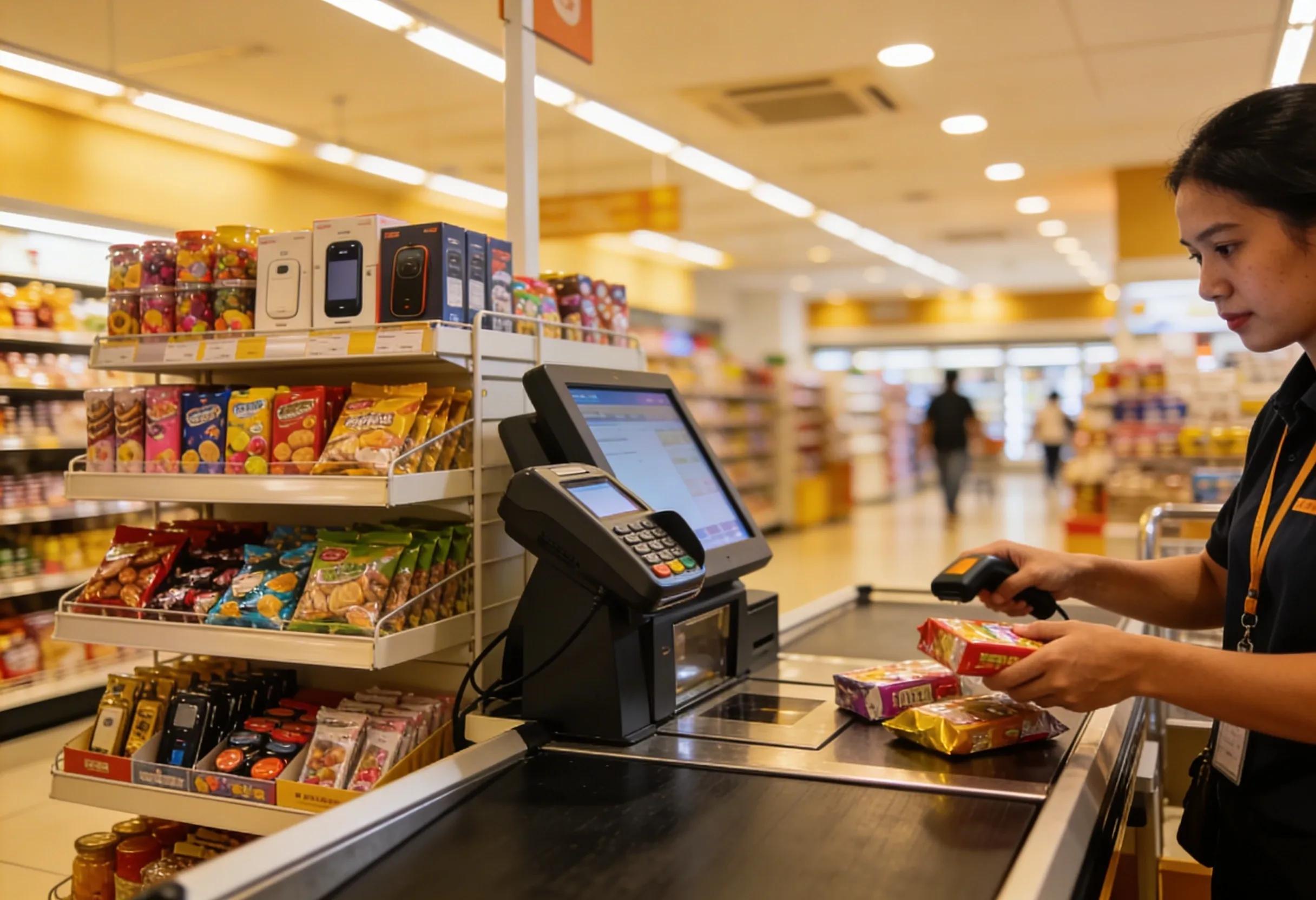
In Merchandising, Point of Purchase (POP) and Point of Sales Materials (POSM) play a central role in shaping effective promotional strategies. Both are designed to capture customer attention and drive sales, but they operate differently and serve distinct purposes within the retail environment.
Although they share the same ultimate goal, POP and POSM differ in scope, placement, and function. Recognizing these differences helps marketers design a more cohesive and effective merchandising strategy.
What is Point of Purchase?
Point of Purchase (POP) refers to displays positioned at the location where a customer completes a purchase. These displays are designed to capture attention at the critical moment when buying decisions are finalized and transactions occur.
In physical stores, POP includes cashier counters, end-cap displays, and other promotional setups placed strategically to influence customer choices. In digital commerce, POP appears on checkout pages or payment screens, showcasing last-minute offers or product recommendations.
As a key merchandising strategy, POP helps guide customer decisions, encourage purchases, and drive sales at the final stage of the buying journey.
Types of POP Displays
Point-of-purchase (POP) displays can be classified into three main types based on their duration of use. Each type is designed to meet specific marketing objectives and campaign timelines.
- Temporary
Temporary POP displays are intended for short-term campaigns, such as seasonal promotions, holiday discounts, or special events. These displays are made from cost-effective materials like cardboard or lightweight components, allowing for easy setup and removal. - Semi-Permanent
Semi-permanent POP displays are designed for longer-term use, typically up to one year. Often called off-shelf or secondary displays, they are placed outside the regular product shelving to increase visibility. Compared to temporary displays, semi-permanent units feature more refined designs and stronger visual themes. - Permanent
Permanent POP displays are designed for long-term placement in retail environments. However, they are less commonly used by large brands, as many prefer shorter promotional cycles to maintain campaign flexibility. These displays are typically more durable and structured, intended to reinforce brand identity consistently throughout the store.
Examples of Point of Purchase
Here are some common POP examples used to attract attention and influence purchase decisions at the final stage:
- Display Rack
Display racks are among the most familiar forms of POP in physical retail stores. Placed near checkout counters or high-traffic areas, they encourage impulse purchases. These racks typically feature fast-moving, low-cost items such as candy, chocolate, or beverages, ensuring high visibility just before customers complete their transactions. - Promotional Stand
Promotional stands highlight specific campaigns or newly launched products. Positioned in prominent areas of the store, they draw immediate attention and increase product engagement. - Digital Display
In digital commerce, POP appears as promotional banners on checkout or payment pages. These digital displays showcase special offers, product recommendations, or last-minute deals to influence online purchase decisions.
Main Differences Between POP and POSM
- Point of Purchase (POP)
POP refers to materials or displays located at the point of purchase are designed to drive immediate buying decisions in a specific location. They focus on the transaction area where the customer finalizes the purchase, such as checkout counters in physical stores or the payment page on an e-commerce website. - Point of Sales Materials (POSM)
POSM encompasses promotional materials that support sales by providing branding, product information, and visual guidance. These materials aim to build brand awareness, convey product details, and enhance the shopping experience.
Placed throughout the store to attract attention and guide customer decisions, POSM includes shelf talkers, brochures, end-cap displays, and other in-store promotional signage.
Optimize Your Point of Purchase Strategy with BOSNET Mobile Merchandiser
Effectively managing Point of Purchase is essential for maximizing product visibility and influencing customer decisions. Proper merchandising ensures displays, promotional signage, and in-store branding are executed consistently across all outlets.
BOSNET Mobile Merchandiser helps businesses maintain full control over their POP execution. With real-time monitoring, photo- and GPS-verified store visits, and tools to track shelf and compliance, BOSNET ensures every display is executed as planned, improving sales, maintaining product availability, and keeping your brand visible in every store.
Contact us to discover how BOSNET can streamline your merchandising operations.
#BOSNET #BestFMCGRunsBOSNET #Distribution #SupplyChain #IncreaseRevenue #ReduceCost #ProtectAssets