In an increasingly competitive business landscape, especially across FMCG, distribution, retail, and merchant ecosystems, sales success is no longer determined only by how much product is shipped from principals to distributors. Modern businesses need to understand two key concepts that work together, sell in and sell out, to gain a complete view of product movement across the channel.
Together, these two metrics form a critical strategy that influences forecasting accuracy, inventory efficiency, and revenue.
What is Sell In?
Sell in is the transaction between a manufacturer or principal and a distributor. It refers to how products are pushed into the distribution network at the first level.
In simple terms, it measures how much stock moves from the principal into the distributor’s warehouse.
At its core, sell in measures three key aspects:
- Volume pushed: how much stock enters the distributor
- Absorption speed: how quickly distributors take in inventory
- Trade appeal: how attractive the product is for distributors to carry
Function of Sell In
In daily operations, sell in is closely tied to core commercial activities between principals and distributors.
- Monthly and quarterly sales targets
Sales teams use these numbers as a primary indicator of how well products are being distributed into the market. - Trade marketing promotions
Trade marketing programs are also designed to accelerate sell in within specific periods. These initiatives encourage distributors to increase purchase volume through promotions or limited-time offers. - Distributor bonuses and rebates
Incentive, such as bonuses and rebates, are commonly used to reward distributors who achieve agreed-upon targets. This creates motivation to maintain consistent purchase levels.
What is Sell Out?
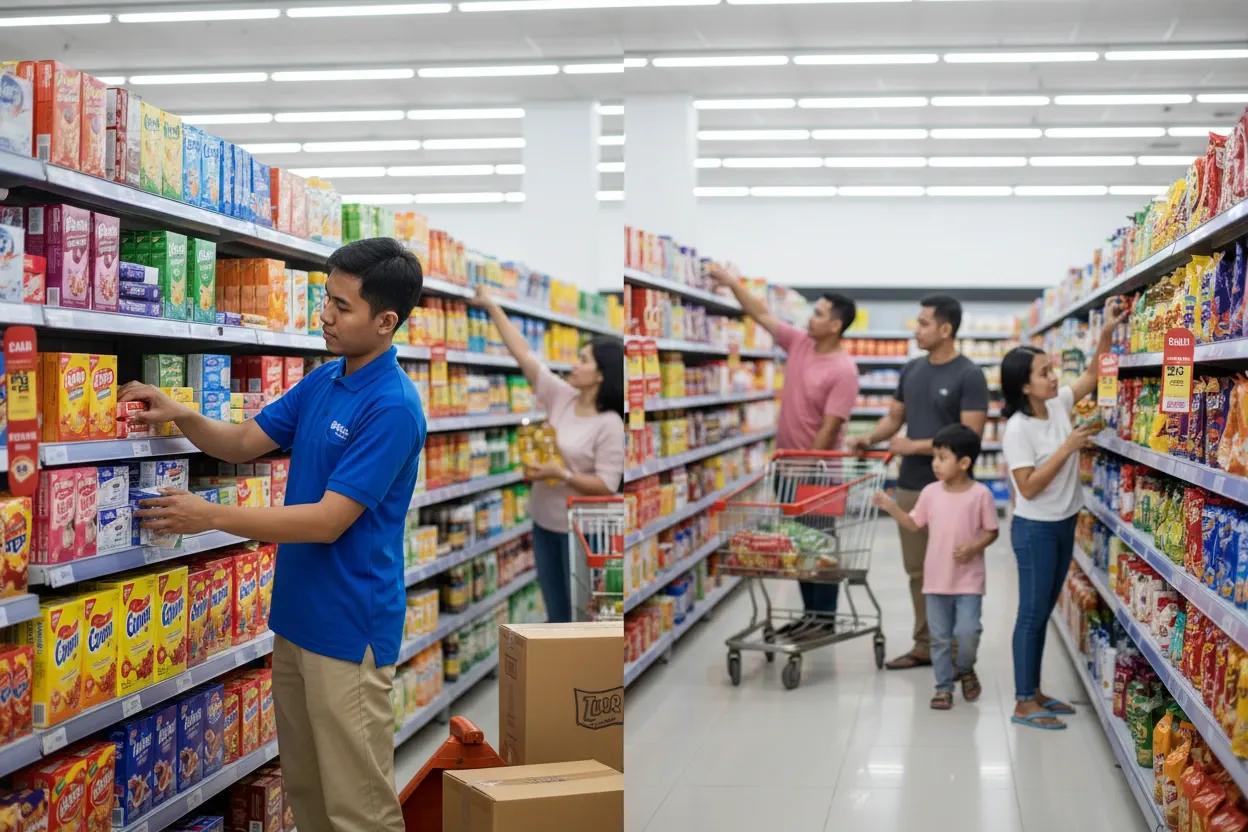
Sell out is the transaction between a distributor and a retailer. It is the stage at which products leave the distributor's warehouse and are placed on retail shelves.
This process shows how effectively distributors are able to push products into retail outlets such as general trade stores, minimarkets, and other sales points.
It provides a clear picture of real market movement within the distribution layer, reflected through:
- Product velocity
How fast products move from distributor to retail outlets - Marketing execution impact
How campaigns or programs influence retailer purchasing behavior - Brand pull at trade level
How attractive the product is for retailers to stock and reorder - Supply and demand balance
Whether distributor stock aligns with actual retail demand
Importance of Sell In and Sell Out
High distribution can look like a win. Products leave the principal warehouse, targets are achieved, and distribution appears active. However, this does not automatically reflect real market movement.
Actual conditions become visible through sell out. This is where products move from distributors to retailers and begin circulating in the market. Without this movement, stock simply sits idle in the warehouse.
When sell in is high but sell out is low, inventory builds up at the distributor level and creates inefficiencies. On the other hand, when sell out is high but supply is limited, distributors may fail to meet retailer demand, leading to lost opportunities.
Benefits of Sell In and Sell Out
- Avoid Overstock
High sell in without visibility into sell out movement can lead to excess stock at the distributor level. When inventory is pushed without matching outbound flow to retailers, stock begins to accumulate.
This creates operational pressure, including higher storage costs and increased risk of product damage or expiration. In many cases, distributors are forced to reduce prices to clear inventory, which impacts margins. By aligning sell in with sell out, companies can maintain better inventory balance across the distribution network. - Accurate Forecasting
Sell in data alone does not represent real demand. It only shows how much stock is delivered to distributors, not how fast it moves to retailers. This gap often leads to inaccurate forecasting, including overproduction or poor stock allocation.
When sell in and sell out data are combined, demand planning becomes more precise. Companies gain visibility into both supply and actual movement, allowing better decisions in production, replenishment, and distribution. - Measuring Product Market Fit
Sell out is a key indicator of whether a product fits market needs at the retail level. It shows whether retailers are willing to reorder and continue stocking the product. High sell in without consistent sell out suggests that the product is not performing as expected in the market.
Through sell out data, companies can evaluate product positioning, pricing, and relevance. It also helps assess whether the product delivers value that aligns with market expectations. - Insight on Promotion
Sell in and sell out together provide a clear view of promotion performance. Without sell out visibility, it is difficult to determine whether a program drives actual market movement or only increases distributor purchases. By tracking both, companies can see whether promotions lead to real distribution to retail outlets.
This also helps identify which channels respond to specific programs and what type of promotion drives consistent reorder from retailers. Over time, these insights help refine trade strategies and improve overall distribution performance.
BOSNET Solutions to Track and Manage Sell-In and Sell-Out
Managing sell in and sell out requires visibility, speed, and accuracy across the entire distribution process. BOSNET provides an integrated set of solutions that help companies monitor the movement of goods.
- Distribution Management System (DMS)
BOSNET Distribution Management System is built to manage all distribution activities in real time. It connects principals, distributors, and sales teams within a single platform, allowing data to flow seamlessly across the organization.
By reducing manual data entry, DMS speeds up information flow and lowers the risk of operational errors. Processes that previously required multiple steps can now be executed with a single click, while policies can be applied consistently across the system - Mobile Distribution
Mobile Salesman is a solution designed to monitor and manage sales activities in the field. In Indonesia, general trade outlets are widely spread and often rely heavily on sales representatives rather than automated systems.
This makes the role of the salesman critical. Distributors depend on them to visit outlets, take orders, and ensure product availability. With Mobile Salesman, every activity is recorded digitally, giving companies visibility into outlet coverage, order patterns, and sales execution. - Mobile Delivery
Mobile Delivery enables businesses to track both sell in and sell out movements through a structured delivery process. It provides a digital way to manage and monitor shipments from dispatch to completion.
With check-in and check-out tracking combined with GPS, every step of the delivery process is recorded automatically. This ensures transparency in product movement, reduces disputes, and improves accuracy. - Smart Route
Smart Route is designed to optimize delivery efficiency by identifying the most efficient routes for distribution. It automates route planning and helps determine the best paths for completing deliveries. By improving route efficiency, companies can reduce delivery time and ensure products reach distributors and outlets faste - Warehouse Management System (WMS)
The Warehouse Management System is used to control, manage, and optimize warehouse operations from end to end. This includes inbound receiving, storage, picking, packing, and outbound distribution. - Stock Replenishment
Stock Replenishment automates replenishment when inventory levels are low. This ensures that inventory levels remain balanced across the distribution network. Products are replenished at the right time, reducing the risk of stockouts while avoiding unnecessary overstock.
150+ Renowned Brands Trust BOSNET for Their Distribution
Over 150 brands rely on BOSNET to manage their distribution and sales processes efficiently. BOSNET provides an end-to-end solution for distributors to track operations, performance, and sales in real time.
Contact us to see how BOSNET can streamline your operations and deliver real-time visibility across your distribution network.
#BOSNET #BestFMCGRunsBOSNET #Distribution #SupplyChain #IncreaseRevenue #ReduceCost