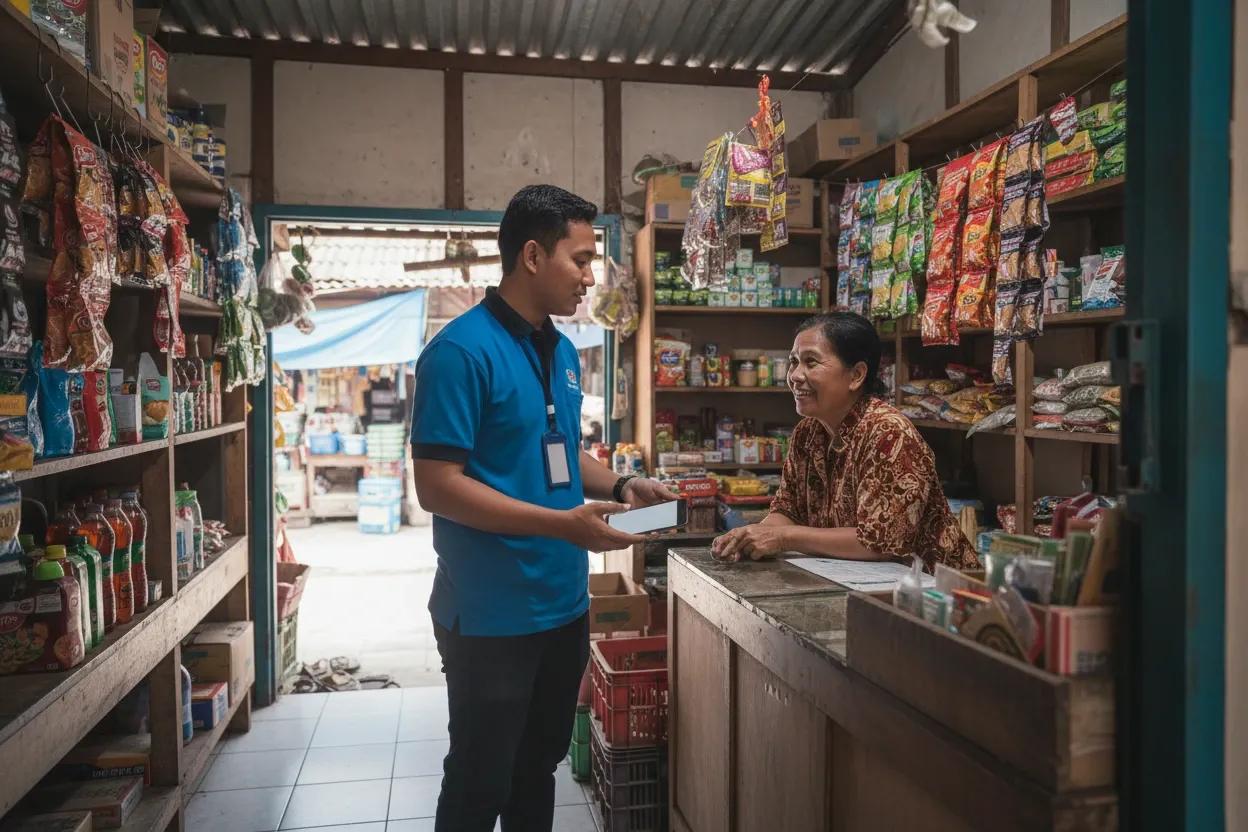
Taking order is an important process in distribution because it connects customers with the products they need. The process includes receiving orders, recording customer requests, and continuing the order to the next operational stages.
The order-taking process is common in industries such as FMCG, retail, and wholesale distribution, where sales representatives visit stores directly to present products and record customer orders.
What Is Taking Order?
Taking order is the process of receiving and recording purchase requests from customers. It is the first step in a commercial transaction, in which a customer submits a request to purchase products from a company or directly from a salesman.
The process includes gathering all necessary details to accurately fulfill the order, such as the product type, quantities, any special requirements, the delivery address, and customer contact information.
Orders can be taken through various channels, such as phone, email, e-commerce platforms, or in-store. Regardless of the channel, the goal remains the same. To capture customer demand accurately and set the transaction in motion from the very first interaction.
Steps and Process of Taking Orders in Distribution
- Sales Order
The first step of taking order is receiving customer orders. In most cases, the process is handled by salesmen who visit retail stores and offer available products to customers.
When a customer places an order, field sales collects key details, including product quantity, delivery details, and payment terms. The collected data is then submitted to the company’s distribution system.
In modern distribution operations, the process is commonly automated. Order information entered by the salesperson is directly connected to the Distribution Management System (DMS) in real time, allowing the company to process orders faster and reduce manual input errors. - Booking Order
After the order is entered into the system, the next step is order verification. The operations or administration team reviews the order details to confirm that all information is valid and complete.
The verification process usually includes checking customer data, pricing, product quantity, delivery address, and payment terms. The purpose is to prevent processing issues and avoid delays during fulfillment. - Check Stock Availability
Once the order has been verified, the warehouse team checks product availability. At this stage, the system confirms whether the requested items are available in the warehouse inventory.
Many distribution companies already automate the stock-checking process using a Warehouse Management System (WMS). The system helps warehouse teams monitor inventory levels, manage product locations, and support faster order fulfillment. - Picking, Putaway, and Packing
After stock availability is confirmed, warehouse staff begin the picking process by collecting the ordered products from their storage locations.
The products are then organized and prepared for shipment. During packing, items are securely packed to reduce the risk of damage during transportation.
Efficient warehouse operations are important for maintaining product quality and ensuring timely deliveries. - Delivery
After packing is completed, the final stage is delivery and shipment tracking. The products are sent to customers according to the agreed delivery schedule.
Tracking systems are used to provide customers with visibility into the status of their shipments. Customers can monitor delivery progress and receive order updates.
The main objective of this stage is to ensure on-time delivery, prevent product loss or damage, and provide customers with confidence throughout the transaction process.
Benefits of Optimizing Taking Order Process
Optimizing the taking order process offers major benefits for distributors, especially in the FMCG industry. Products move fast, and order volume keeps growing each day.
An efficient order management process helps distributors improve operational performance, reduce unnecessary costs, and support business growth.
- Improve Operational Efficiency
One of the biggest advantages of optimizing the taking order process is better operational efficiency.
An optimized process helps companies reduce wasted time, labor, and operational resources during order processing. Sales teams, warehouse staff, and administrative teams can work faster because information is connected within a single system.
By using distribution software, companies can also reduce the risk of data entry errors and improve coordination between related departments. Real-time information allows every team to access the same order data and respond faster to customer needs. - Reduce Operational Costs
Cost reduction is another important benefit of optimizing the taking order process. Manual processes often lead to unnecessary operational expenses from repeated work, paperwork, delayed communication, and order-handling mistakes. When processes are automated, distributors can reduce resource waste and improve workforce productivity.
Technology also helps companies optimize order processing, inventory handling, and delivery coordination. As a result, businesses can operate with better cost control while maintaining service quality. - Increase Revenue
An efficient taking order process can directly support revenue growth. When order processing becomes faster and operational activities run efficiently, sales teams can focus on serving customers and increasing sales opportunities instead of handling administrative tasks manually.
Higher productivity allows teams to manage larger order volumes and respond to customer requests faster. Better service quality can also improve customer satisfaction and encourage repeat purchases.
BOSNET Solutions for Streamlining The Order Taking Process
Managing the taking order process in the distribution industry requires speed, accuracy, and coordination across multiple operational activities. BOSNET provides integrated digital solutions designed to help distributors manage orders, warehouse operations, sales activities, and delivery processes efficiently.
- Mobile Distribution
Mobile Distribution helps field teams manage field activities directly from their mobile devices. BOSNET Mobile Distribution allows sales teams to record transactions, manage customer visits, take orders, and access sales information in real time while visiting stores. By digitizing field operations, distributors can improve response time and reduce manual administrative work. - Distribution Management System (DMS)
The Distribution Management System (DMS) helps companies manage sales orders and monitor performance across distribution operations. The system provides real-time visibility into order processing, sales transactions, inventory status, and operational performance. With centralized information, distributors can improve coordination between sales, warehouse, finance, and delivery teams. - Warehouse Management System (WMS)
Warehouse Management System (WMS) supports inventory management from inbound to outbound processes with high accuracy. BOSNET WMS helps warehouse teams manage product movement, inventory tracking, picking, packing, and putaway activities efficiently. - Smart Route
BOSNET Smart Route helps distributors optimize sales visit routes and delivery planning. Distributors can reduce travel time, improve delivery scheduling, and increase field team productivity. Better route planning also helps companies improve operational efficiency while reducing transportation costs. - Mobile Delivery
Delivery teams can access shipment information directly from mobile devices and update delivery status in real time. The solution also helps companies monitor delivery performance and improve shipment visibility.
150+ Renowned Brands Trust BOSNET for Their Distribution
Over 150 brands rely on BOSNET to manage their distribution and sales processes efficiently. BOSNET provides an end-to-end solution for distributors to track operations, performance, and sales in real time.
Contact us to see how BOSNET can streamline your operations and deliver real-time visibility across your distribution network.
#BOSNET #BestFMCGRunsBOSNET #Distribution #SupplyChain #IncreaseRevenue #ReduceCost