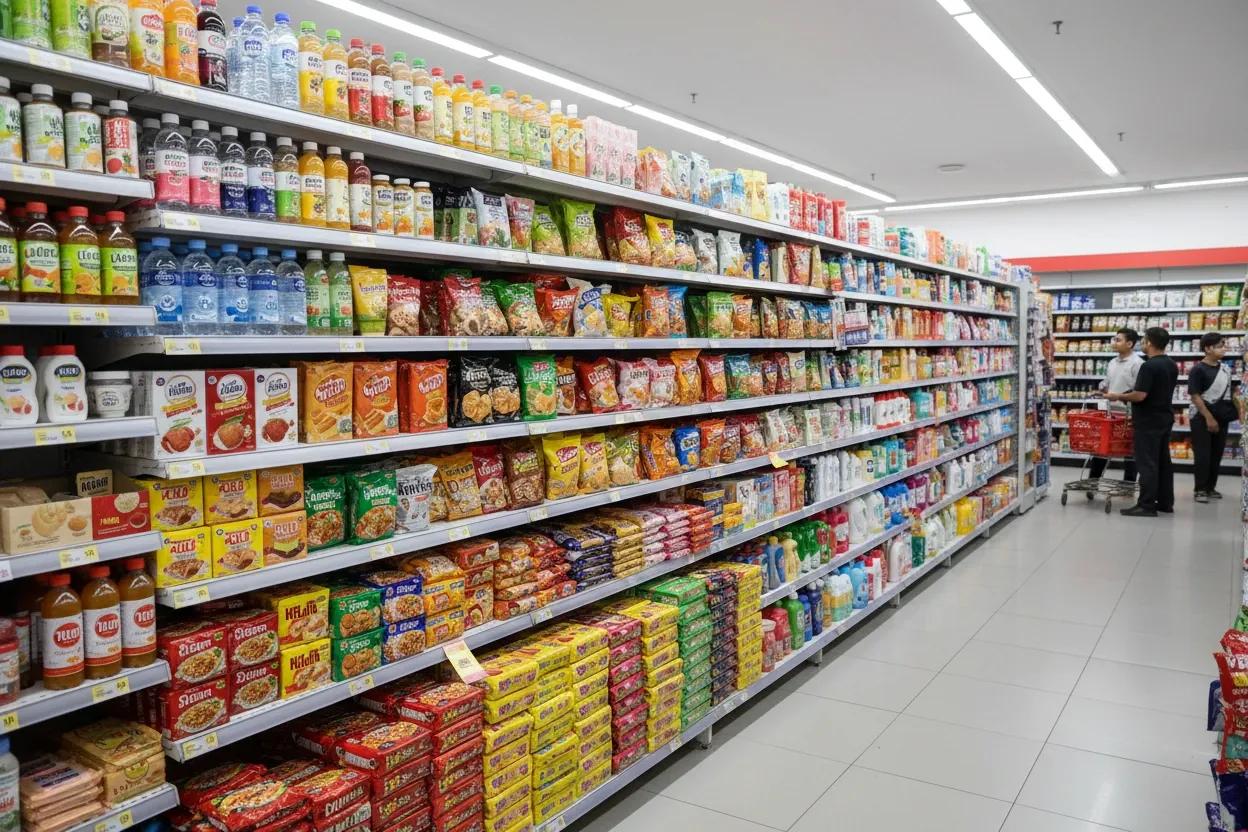
Indonesia is home to a wide range of industries, with businesses operating across various sectors to serve diverse consumer needs. Among these, the FMCG industry plays a critical role in supporting daily consumption through fast-moving products that require wide availability and efficient distribution.
However, FMCG companies face increasing complexity in managing their operations. From multi-layered distribution channels, changing consumer demand patterns, in-store execution, and product visibility.
As demand rises, these challenges become even more critical, requiring companies to maintain higher levels of efficiency, visibility, and control across their operations.
Definition of FMCG
FMCG (Fast Moving Consumer Goods) refers to products that have high demand and are sold quickly in the market. These items are typically low-priced and purchased frequently, allowing them to move rapidly from manufacturers to retailers and finally to consumers.
These goods are classified as consumer products, meaning they are intended for daily use or regular consumption. They are essential items that support everyday needs, such as food and beverages, personal care products, and household essentials. Because of their frequent usage, consumers tend to repurchase these products in short and consistent cycles.
FMCG companies, both in Indonesia and globally, rely on wide distribution networks to ensure product availability across various locations. This approach helps make products easily accessible to consumers, whether in modern retail stores, traditional outlets, or other sales channels.
Characteristics of the FMCG Market
- High Turnover Rate
Fast-moving products have a high turnover rate, meaning they are sold quickly and continuously in the market. Items such as food, beverages, and personal care products are consumed within a short period, requiring frequent restocking at the retail level. This rapid product movement enables companies to maintain consistent sales volume and stable revenue flow. - Frequent Consumer Purchase
FMCG products are purchased frequently because they are essential for daily life. Consumers tend to buy these items on a regular basis, such as daily or weekly, depending on their needs. This consistent purchasing behavior creates stable demand in the market and contributes to the highly competitive nature of the industry. - Wide Distribution Network
Another key characteristic of the fast moving consumer goods market is a wide distribution network. Companies distribute their products across multiple retail channels, including supermarkets, minimarkets, and traditional stores. This ensures that products are easily accessible and available to consumers in various locations, allowing them to purchase goods conveniently whenever needed.
Examples of FMCG Industries in Indonesia
FMCG industries in Indonesia cover a wide range of sectors that produce and distribute products used in daily life. Below are some of the largest fast moving industries in Indonesia.
- Food
The food industry includes packaged foods, snacks, and perishable goods. These products are essential for daily consumption and are widely available in supermarkets, minimarkets, and traditional stores across Indonesia. - Beverage
This industry covers a variety of drinks, ranging from soft drinks and juices to bottled water and alcoholic beverages. - Pharmaceutical
The pharmaceutical sector includes medicines, health supplements, and various healthcare products. - Personal Care and Cosmetics
This industry consists of skincare, beauty, and hygiene products such as soap, shampoo, toothpaste, and makeup. - Cigarette and Tobacco
Includes regulated products such as cigarettes and other tobacco-based goods. - Automotive Supporting
Provides fast-moving automotive-related products such as spare parts, lubricants, and other vehicle components. - Building Material
Distributing construction materials, tools, and hardware supplies. - Other FMCG Distributors
This category includes distributors that handle various household essentials, packaged goods, and snacks.
Challenges in the FMCG Industry
- Changing Consumer Behavior
One of the key challenges in the FMCG industry is the constantly evolving nature of consumer behavior. Demand for FMCG products is not always stable and can shift depending on various factors such as holidays, seasonal trends, economic conditions, and changes in lifestyle preferences.
For example, some products may experience a spike in sales during festive seasons, while in normal periods the demand can decrease significantly. This makes it difficult for companies to forecast sales accurately and plan production or inventory in advance. - Inefficient Supply Chain
Issues such as delayed product deliveries, stock shortages, and limited coordination between suppliers, distributors, and retailers can disrupt the smooth flow of goods across the value chain.
In some cases, companies also face limited visibility into field operations, making it difficult to fully monitor activities within distribution channels. When the supply chain is not well-structured or properly controlled, it can result in products not reaching stores on time, ultimately affecting product availability at the point of sale. - Thin Margin
FMCG is also known for having very thin profit margins. This is mainly driven by intense market competition, which often forces companies to reduce prices in order to remain competitive and attract consumers.
At the same time, operational costs such as production, transportation, marketing, and distribution continue to increase. As a result, although FMCG companies may generate high sales volumes, the profit earned from each individual product remains relatively small. - Low-impact Promotions
Companies often invest heavily in marketing and promotional activities, but the results are not always effective. In some cases, promotional materials may not be properly displayed in stores, not visible to customers, or not executed according to the original plan. - Digital Transformation
In today’s industry, digital transformation has become both a necessity and a challenge. Many companies are now using FMCG software to automate various business processes such as reporting, sales tracking, inventory management, and promotion management. However, adopting these technologies requires investment, training, and system integration across different departments.
To address these challenges, BOSNET provides end-to-end software solutions for various sectors within the FMCG industry, from back office, sales, delivery, promotion, supply chain, and insights. With this integrated approach, companies can optimize workflows, gain real-time insights, and ensure seamless operations across all areas.
Marketing Strategies in FMCG
There are various marketing strategies used in FMCG to expand market reach and ensure products are accessible to different segments of consumers, they are:
- Distribution Channels
One of the most important strategies in FMCG is the use of multiple distribution channels, especially General Trade (GT) and Modern Trade (MT).
In Indonesia, General Trade, such as traditional markets and small shops still plays a significant role, as many consumers rely on these outlets for their daily needs. Therefore, companies must ensure strong presence and consistent product availability across both GT and MT channels to maximize reach. - Promotions and Discounts
Since FMCG products are sold in large volumes across many retail outlets, companies need to continuously run promotional activities to attract consumer attention and drive purchase frequency. These activities often include in-store execution such as banners, shelf displays, and special pricing materials placed across different outlets.
To support this process, BOSNET Mobile Merchandiser enables real-time monitoring of in-store execution and tracks merchandiser activities in the field. This helps ensure that promotional programs are implemented according to plan across all locations. - Branding and Positioning
Companies must ensure that their products are placed in the right location and presented in a way that attracts consumers. This includes the use of planograms and structured merchandising to organize product placement on shelves.
End-to-end solutions like BOSNET Vision supports in-store monitoring by using image recognition to validate planogram compliance. This helps ensure that product displays are aligned with the intended standards across all outlets.
150+ Renowned Brands Trust BOSNET for Their Distribution
Over 150 brands rely on BOSNET to manage their distribution and sales processes efficiently. BOSNET provides an end-to-end solution for distributors to track operations, performance, and sales in real time.
Contact us to see how BOSNET can streamline your operations and deliver real-time visibility across your distribution network.
#BOSNET #BestFMCGRunsBOSNET #Distribution #SupplyChain #IncreaseRevenue #ReduceCost