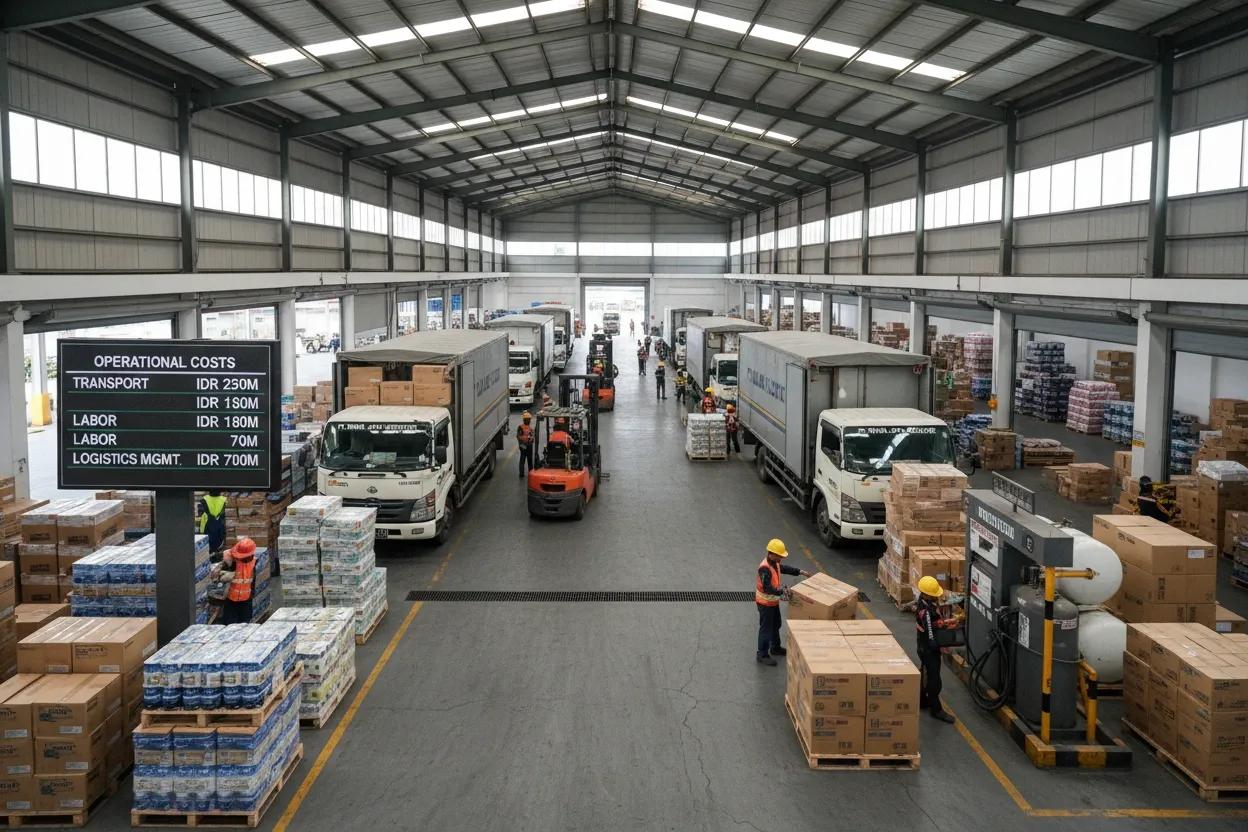
Distributors are always faced with various operational expenses. From production and logistics to sales and distribution, every process involves spending that needs to be monitored carefully. One of the most common expenses in daily operations is variable cost.
Since these expenses can change depending on production and sales activity, companies need proper planning to calculate them accurately. Incorrect calculations may affect pricing decisions, budgeting, and profits.
Definition of Variable Cost
Variable costs are expenses that change with the level of production or product sales. When production increases, the total spending also rises. On the other hand, lower production or sales activity will reduce spending on these items.
In distribution, variable costs fluctuate based on sales performance and production volume. Common examples include raw materials, packaging, and direct labor involved in the manufacturing process.
Characteristics of Variable Cost
Several factors can affect variable costs, including raw material prices, labor wages, and overhead costs. Changes in any of these components can influence a company’s overall production spending.
Variable costs also play an important role in determining product selling prices. Companies often calculate these expenses to maintain profitability while staying competitive in the market.
In addition, the total amount of spending will continue to fluctuate depending on the number of products produced during a certain period.
Types of Variable Cost
Variable costs can generally be divided into two main categories, namely engineered and discretionary.
- Engineered
Engineered cost refers to expenses that are directly related to production volume. Common examples include raw materials, direct labor, and energy used during the production process. Since these expenses are closely connected to operations, businesses often monitor them to maintain efficiency. - Discretionary
Discretionary costs are expenses that can be adjusted by company management within a short period. These expenses arise from managerial decisions and may fluctuate depending on company policies and business priorities.
Examples include advertising expenses, employee training programs, and research and development activities. Companies usually allocate these expenses based on financial conditions, growth targets, and market strategy.
Example of Variable Cost
Distributors can find examples of variable costs in various areas of business operations. These expenses tend to vary with production activity, sales volume, and distribution needs.
- Raw Materials
Raw material costs are expenses for materials used during the production process. The total spending increases alongside production volume because additional materials are needed to produce larger quantities of products. - Labor
Direct labor cost includes wages paid to workers involved directly in manufacturing products. The number of workers needed and related expenses usually fluctuate with production activity and operational demand. - Commision
Sales commission costs are expenses paid to sales teams based on the number of successful sales transactions. Higher sales volume generally leads to higher commission payments. - Packaging and Shipping
Packaging and shipping expenses vary depending on the number of products delivered to customers. Businesses with higher shipment volumes typically spend more on packaging materials and delivery services.
How To Count Variable Cost
Variable cost can be calculated by subtracting fixed cost from total cost, then dividing the result by the total quantity of products produced. Businesses use the calculation to understand the average production expense for each unit.
The formula for calculating variable cost is:
Variable Cost (VC) = (Total Cost (TC) - Fixed Cost (FC)) / Quantity
Manage Variable Cost with BOSNET Distribution Management System (DMS)
Take full control of your variable costs with BOSNET Distribution Management System (DMS), a digital platform designed to give distributors real-time visibility into sales activities, inventory movements, and operational expenses. As production and sales volume shift, BOSNET DMS helps businesses monitor cost changes and respond faster.
From tracking order processing to evaluating sales performance across distribution points, our solutions provide accurate data that helps businesses increase revenue and reduce costs.
Contact us to see how BOSNET can help your business manage variable costs and improve operational efficiency.
#BOSNET #BestFMCGRunsBOSNET #Distribution #SupplyChain #IncreaseRevenue #ReduceCost